Today I forgot to buy red peppers for a dish I’m making for a church potluck. A week I ago I forgot I had a house community dinner. A few months ago I completely forgot a meeting and left a friend eating lunch by herself. Age, it seems, is catching up with me. It’s not bad if I remember to write things down. Still, it’s rather disconcerting when your mind, or body, begins to betray you despite your best efforts to live like nothing is changing. Continue Reading »

Photo by Nan Palmero
By Ajung Sojwal
Soon after I turned 31, having been a stay-home mom with two kids for six years or so, I became anxious that life was passing me by. I became afraid of waking up one day filled with regrets for having wasted my life. My conversations and reading materials seemed to begin and end with everything to do with children and nothing else. Continue Reading »
Posted in reflections | Leave a Comment »
By Angela Ryo
My dad turned 80 last month. I never thought I’d see the day my dad would turn 80, but there I was, driving to Chicago from Detroit to celebrate his 80th birthday. He celebrated just the way he wanted: Eating take-out Chinese food from his favorite place, surrounded by his children and grandchildren, and talking to his 88-year-old brother in Korea over the phone. Continue Reading »
Posted in reflections | Leave a Comment »
By Sarah D. Park
In the bathroom of my parents’ home, there is a poem scotch-taped to the wall. Should you sit down on the toilet, you can easily read it from there. I cannot remember when this poem first appeared — at least since the time I was in fifth grade — and it did not come with any explanation or fanfare when it simply appeared one day. And I’d like to share it with you. Continue Reading »
Posted in reflections | Leave a Comment »
By Joy Wong
Beauty’s a tough subject for me — and, I imagine, for most women. It seems that nearly every woman I encounter is unhappy about some aspect of her appearance. One woman laments the size of her hips and thighs. Another mom marvels at the ability of a lady on a blog who gave birth seven times and is still able to maintain a flat stomach. Personally, I’ve been noticing an increasing amount of freckles and sunspots on my face. I also wonder when (or if) my tummy will ever go flat again, and if I will ever lose all my postpartum weight.
What’s funny (and horrific) about it all is that it seems that my ideal self is an ever-moving target. These days, I pine for my slim self when I was in my 20s, but as I recall, back then I wasn’t happy about some other aspect… perhaps some acne, or volumeless hair, or whatever. One of the graces I find about being a mom of three kids is that while I’m too busy to work on my appearance, I’m also too busy to spend too much time critiquing myself either.
“Beauty is fleeting,” as Proverbs 31:30 says (NIV). It makes me think of cut flowers — beautiful for a couple days, and if you’re lucky, for a week or so; but in a short time, it all starts to brown and wither. I find that roses tend to die most gracefully, but even dead roses are such a sad comparison to their former gorgeous blooms. Very depressing, especially when we think of our own beauty in the same way!
But a new metaphor is now dawning on me, and giving me a bit more hope: not the beauty of cut roses, but the beauty of a rose bush, planted in the ground. It reminds me of the tree “planted in streams of living water, which yields its fruit [or in the case of our metaphor, flowers] in season and whose leaf does not wither — whatever they do prospers” (Psalm 1:3 NIV). Or even of Paul’s exhortations to be “rooted and grounded in love” (Eph. 3:17) and/or “rooted…abounding in thanksgiving” (Col. 2:7) (NIV).
Perhaps it’s true that our beauty is fleeting, but just as a rose bush yields new flowers in new seasons, so also perhaps our lives yield new beauty in different seasons of our lives. In aging, perhaps there is new beauty in confidence, in joy, in maturation, in appreciation, in wisdom, in gentleness, in patience, in perspective… and the list goes on.
For me, something I’d like to gain is appreciation… for the beauty I have, rather than the beauty I’ve lost, or don’t have anymore. After all, beauty is fleeting, right? What I have now (and fail to appreciate), I may not have tomorrow, and perhaps I may be lamenting the loss of it in the next season. Instead of succumbing to the incessant nagging of my inner critic, I want to be grateful. Moreover, I want to be rooted, yielding beauty in the due seasons of my life.
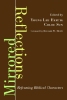
Joy Wong has an MDiv from Fuller Theological Seminary, a BA in English from Princeton University, as well as four years’ experience in industrial distribution management. She is a contributing author to Mirrored Reflections: Reframing Biblical Characters, published in September 2010.

Posted in reflections | Tagged gratitude, seasons of life | 2 Comments »
By Wendy Choy-Chan
Posted in reflections | Leave a Comment »
By Tina Teng-Henson
Boxes of files neatly line the shelves and the center section of our garage. Some are filled with manila envelopes, each containing mementos, clippings, photos, and important documents from every chapter of my life. High school, college, every job I’ve ever had. Other boxes date back farther, containing letters from penpals in elementary, middle, and high school. What else? Continue Reading »
Posted in Uncategorized | Leave a Comment »
By Liz Chang
Posted in Uncategorized | Leave a Comment »
By Debbie Gin
While “spontaneous” does not readily characterize me, I have engaged in my share of after-midnight, spur-of-the-moment beach-fishing runs and sleep-outside-on-the-stairs-of-the-college-chemistry-building-just-for-the-heck-of-it episodes. Most of these trysts with fellow rebels took place when I was younger — when I had fewer responsibilities and had less to risk. Now, older and with more to risk, I find it harder to welcome spontaneity.
To be sure, it rubs me the wrong way when the topic I was invited to speak on changes last minute or when the restaurant we’d decided on gets usurped for another, more exciting venue. As a fairly strong Myers-Briggs’ “J”, I like my world ordered. Spontaneity has little room in such a world, where “spontaneous” is a euphemism for “undisciplined” or “lacking in planning.” I also chafe at how society tends to value unshackled “creative vision” above careful “organized management” — with no imagination for a combination of these — in its leaders. So those who do welcome spontaneity by nature may find nothing to gain from this post.
In theological education (and in higher education, more generally), innovation has become a major driver. With post-2008 economic downturn decreases in enrollment and steady increases in operating budgets and tuition (for various reasons), institutions are having to defend their existence or, at least, show the return on students’ investments. In such tumultuous times, theological schools are needing to (learn to) be agile. Being agile (adaptable, nimble, flexible) is not the same as being undisciplined, however. The risk is too high to approach innovation randomly. Most newer schools are tuition-driven, while many older schools are endowment-reliant and finding themselves dipping into the endowments. They’re all finding ways to innovate responsibly. And, if books like New York Times’ bestseller The Lean Startup: How Today’s Entrepreneurs Use Continuous Innovation to Create Radically Successful Businesses are any indicator, being agile means replacing 10- and 20-year strategic plans with ongoing strategic priorities or principles.
So what does this description of institutional agility have to do with individual spontaneity? Individual spontaneity comes through a strategically principled life — basing decisions on the principles that you have intentionally named for your life and vocation. I believe expressions of spontaneity in the life of the believer are experienced through the movement of the Spirit. The Spontaneous happens in the prompting to care for someone you know very little about. You experience It when a national atrocity occurs, and you rise — perhaps uncharacteristically — to fight the hate and injustice. You receive It when someone outside your community advocates on your behalf.
But spontaneity is not undisciplined; it is not irresponsible. This is good news for women, in particular, because, as typical multi-taskers, they have little room for spontaneity. Many of my women friends have had to make great professional sacrifices because they are taking care of children or elder parents or both. They are also hard-working employees and ministers, contribute to the life of the church, and keep their homes running. Their schedules are packed, so they must be disciplined. Having to don so many roles does mean they have little to no room for the spontaneous get-together with strategic potential partners, and the sacrifices they have to make keep them from benefiting immediately from a quick (i.e., “spontaneous”) decision because they have to find a babysitter, someone to take their parents to the doctor, etc. However, the disciplined life they have cultivated by necessity will hopefully have caused them to live by strategic principle, and the Spirit will ultimately bring expressions of spontaneity into that life of discipline. I encourage you (and myself) to also be disciplined in planning space in your schedules for the Spontaneous to prompt.
Dr. Debbie Gin is Director of Faculty Development and Research at The Association of Theological Schools/Commission on Accrediting, the support and accrediting organization of most seminaries in the US and Canada. She was formerly Associate Professor of Ministry at Azusa Pacific Seminary and Fellow for Faculty Development and Evaluation in the Center for Teaching, Learning, and Assessment at Azusa Pacific University. She and her husband currently live in Pennsylvania.
Posted in reflections | Leave a Comment »
By Sharon Lee Song
Traditional Korean family culture is not a culture that is characterized by spontaneity. I would generalize and say that this is true for other East Asian cultures (Chinese, Japanese). There are strong familial expectations for each individual, and particularly for children to fulfill their parent’s expectations for life, career, and future family generations. Continue Reading »
Posted in reflections | Tagged Holy Spirit, improvisation | Leave a Comment »